

Mastering the Art and Science of Construction Claims
The Strategic Value of Claims Management
In the construction industry, claims are often viewed with hesitation, yet they represent a vital component of a project's financial health. A successful contractor understands that claims are not merely about recovering money at the conclusion of a project but are a strategic tool for winning bids and managing risks. Many clients maintain contingencies of approximately 15% as management reserves; a "SMART CLAIM" strategy allows a contractor to access a portion of these funds by demonstrating merit-able heads of claim.
Construction claims are a unique blend of Art and Science:
The Art: This lies in the presentation—how the claim is written and presented interactively to stakeholders to facilitate a "coffee table" resolution.
The Science: This refers to the methodical building of the claim, ensuring it is grounded in scientific delay analysis and robust evidence.
Navigating Delays and Extension of Time (EOT)
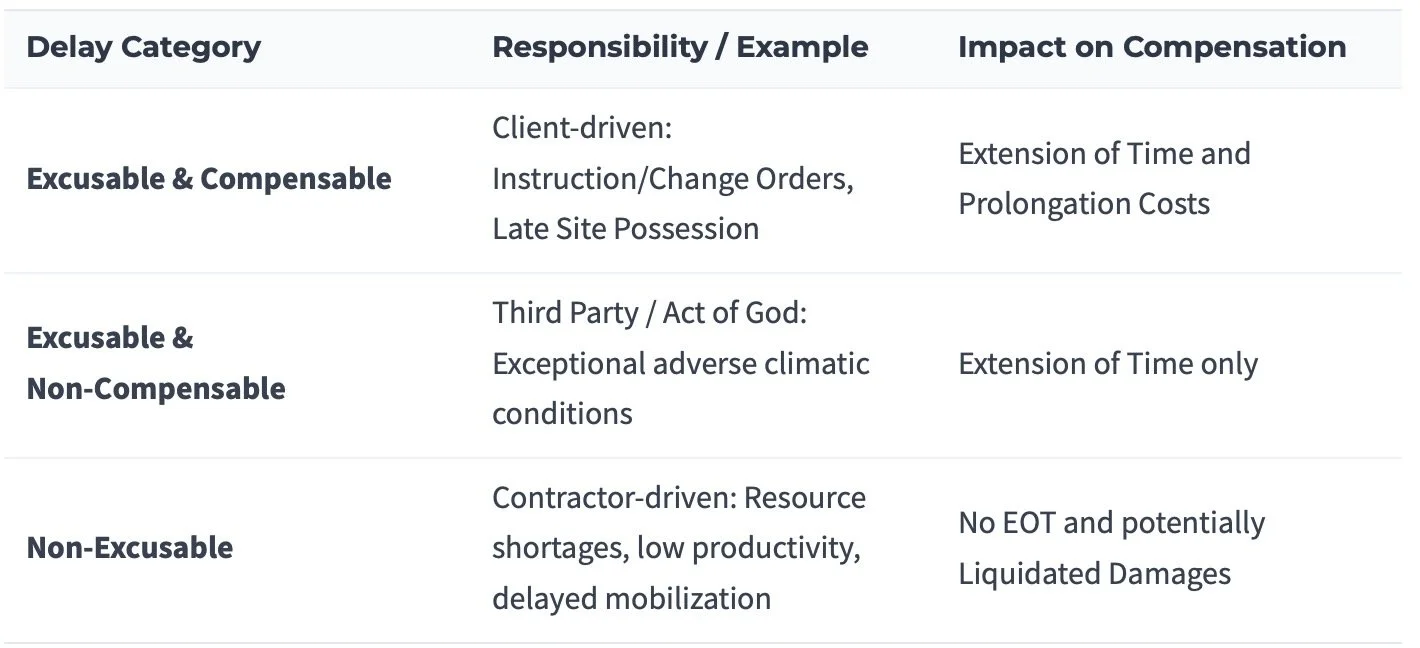
Determining the culpability of a delay is the primary goal of any delay analysis. Delays generally fall into three categories:
A successful Extension of Time (EOT) claim must precisely identify the prolongation period and calculate associated costs, such as site overheads, office rentals, and utility bills.
The Critical Role of the Contract Administrator (CA)
A competent Contractor's CA is essential for maintaining project viability. Their primary duties include:
Issuing notifications within contractual time bars (e.g., within 7 days of awareness).
Drafting contractual letters that comply strictly with contract clauses.
Maintaining a comprehensive log of all contractual correspondence.
Advising on the contractual standing of every emerging situation to protect the company's financial health.
Best Practices in Record Keeping
The strength of any claim lies in its documentation. As the industry saying goes: "Once we have records, we can do miracles. Without records, we can do nothing.".
To ensure a claim is defensible, contractors should implement these best practices:
Maintain Tracking Registers: Establish logs for contractual letters, document submittals, procurement tracking, and shop drawings.
Delay Event Tracker: Maintain a dedicated tracker to capture events as they occur.
Monthly Progress Reports: Use these to contemporaneously record status and potential impacts.
Daily Reconciliations: Where possible, reconcile quantities and data daily to ensure accuracy.
Interim Submissions: Submit interim claims while the effect of a delay is ongoing, followed by a final submission once the impact has expired.
By treating claims as a disciplined process rather than a final conflict, contractors can bridge the gap between parties and reach professional business decisions that protect project margins.